 Image 1 of 1
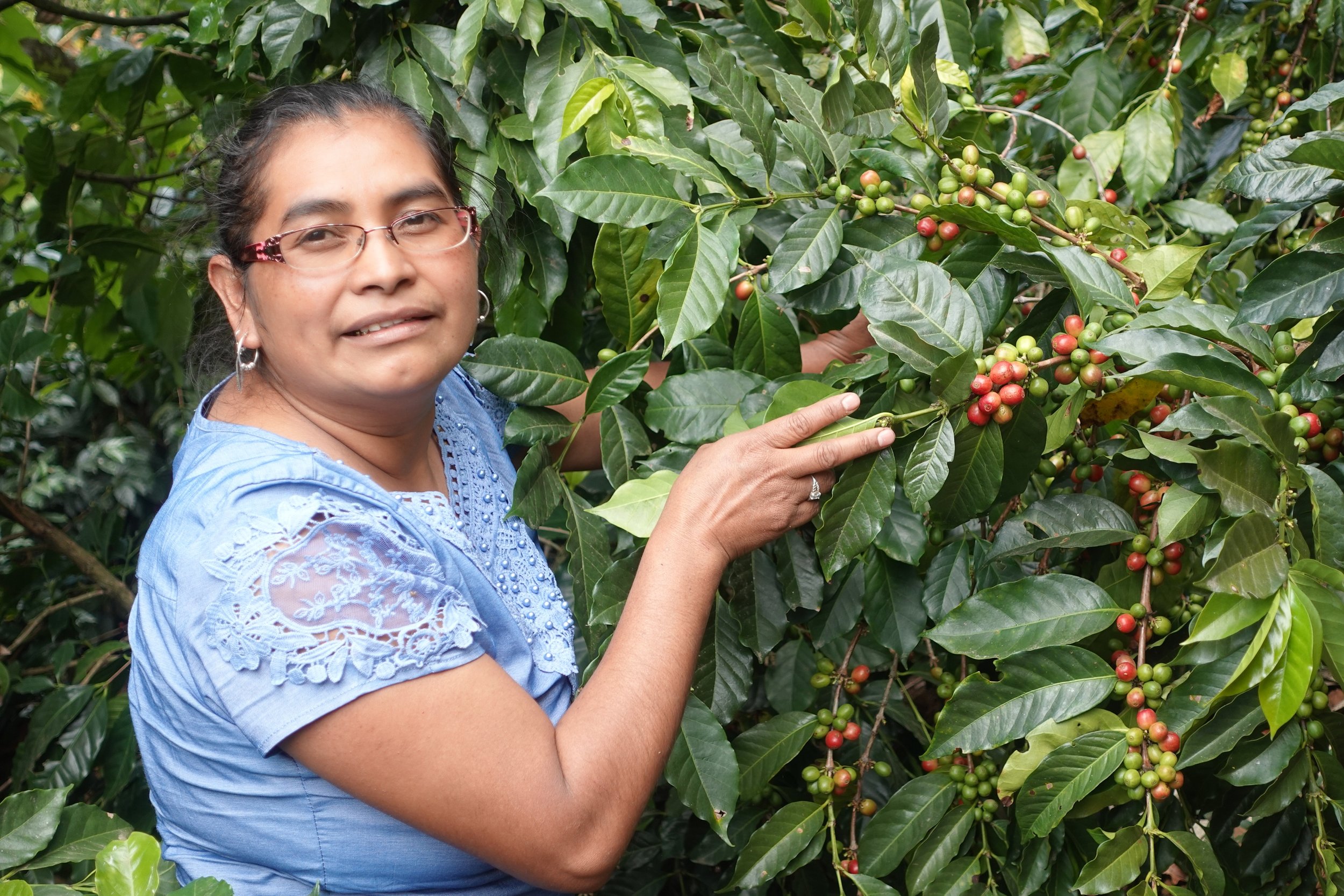
This three bag lot comes from Leonides Castro Garcia’s small farm in Mixtexa, Oaxaca. This is our second year purchasing coffee from the producers and co-ops of the “Good Coffee Program” created by Crop to Cup, and the quality is as fantastic as last year. This is a fully washed lot made up of classic varieties Bourbon, Caturra, and Typica with notes of apple, pear, tangerine, brown sugar, and medium dark chocolate.
Here we present info about the farmer and the impressive program our importers have developed to source this coffee, as well as a brief background on Mexico’s coffee history to provide context for the indigenous groups producing coffee in Mexico today.
MEXICO CONTEXT
From our importer partners at Crop to Cup:
While often overlooked by their neighbors to the north, Mexico is the world’s 7th largest coffee producer, the largest exporter of organic coffees, and a fast-growing consumer of specialty coffee. Seventy percent of Mexico’s crop comes from larger estates concentrated around Veracruz, with the remaining thirty percent coming from two million smallholders, spread around the country but mostly in the Southern States of Chiapas and Oaxaca.
This is also where we find most of Mexico’s indigenous population, communities who moved higher and higher up-mountain, onto smaller and smaller plots of land, first to get away from colonial Spain, and later pushed by larger landowners during decades of highly political land reforms. In this way Mexico’s agrarian, coffee, and Puebla movements are intertwined.
First introduced by Spanish colonizers in the 18th century, coffee in Mexico initially grew on large plantations owned by Europeans and worked by Mexican laborers. Following Mexican independence, wealthy landowners wielded “modernization” as the rationale to abolish communal land rights, stripping indigenous communities of their lands to form large estates. Agrarian land reforms following the Mexican Revolution started a process of redistribution of land from those larger private estates back to smallholders through the ejido system, which established communal land areas dedicated to agricultural production. In 1973, to promote coffee production on these newly created lands, the Mexican government established The Mexican Coffee Institute (Instituto Mexicano del Café, or INMECAFE), which provided technical assistance, equipment, transportation and credit so that coffee producers could deliver their coffee to the international market. The 1980’s saw the rise of neoliberalism and the abolition of INMECAFE in the same year that the international Coffee Agreement collapsed, exposing small farmers to extreme price volatility. In response, many of the coffee growers in Mexico (who today number more than 500,000, 85% of whom are indigenous) organized into informal cooperatives or otherwise collaborated to mitigate their risk and attempt to access the best price for their coffee.
There is still so much room to improve how we buy coffee, which is why we are super excited about the potential presented by Crop to Cup’s “Good Coffee Program” implemented in Mexico. They have invested a lot of resources in the project and the quality of the coffees and premiums they are commanding seem to prove that this sort of effort works! Here is some info from them about how this program works:
“Every two weeks throughout the harvest we publish a table of prices in Mexican Pesos per kilogram of pre-milled parchment as well as US Dollars per pound ‘oro’ (export-ready green) delivered to the port of export. These transparent offer prices include progressively increasing premiums based on cup quality. The pricing table comes with a calculator to help farmers track costs and assess variables between the two forms of delivery. Independent cuppers are few and expensive, meaning that anyone cupping your coffee is likely to be employed by an intermediary in the business of ‘buying low and selling high’. By contrast, we’ve pre-contracted Denso’s quality evaluation services independent of a purchasing decision, allowing them to offer cupping as a quick, easy, and free educational service. The exporter of GCP lots has been commissioned to pay farmers on our behalf as well as to collect, store, mill, bag and export the coffee at a fixed rate. Coupled with a collaborative line of credit, this allows transparency all through to milling. As an importer, Crop to Cup operates on a cost-plus model, allowing for full pricing transparency between roasters and the farmers whose coffees they purchase. Beginning this year (2024), in cooperation with the Good Coffee Program and the State of Puebla, the informal groups are organizing as formal cooperatives, allowing them to receive direct payment, coordinate more efficient trucking and receive additional support.”